Showing posts with label Review. Show all posts

Friday, January 21, 2011

What It Is: All the Treasures of the World by Faster Monkey Games

Did I say I wouldn't have time to review the first two entries in the All the Treasures of the World series by Joel Sparks and published by Faster Monkey Games?  Well, you can thank Mother Nature for giving me the time.  Thanks to about two or three inches of snow, East Stroudsburg University cancelled classes for the second time in a week.  Mrs. Higgipedia and I got to spend another snow day together and, while she works, I'll write up a more comprehensive review.

Now I know what some of this stuff is!
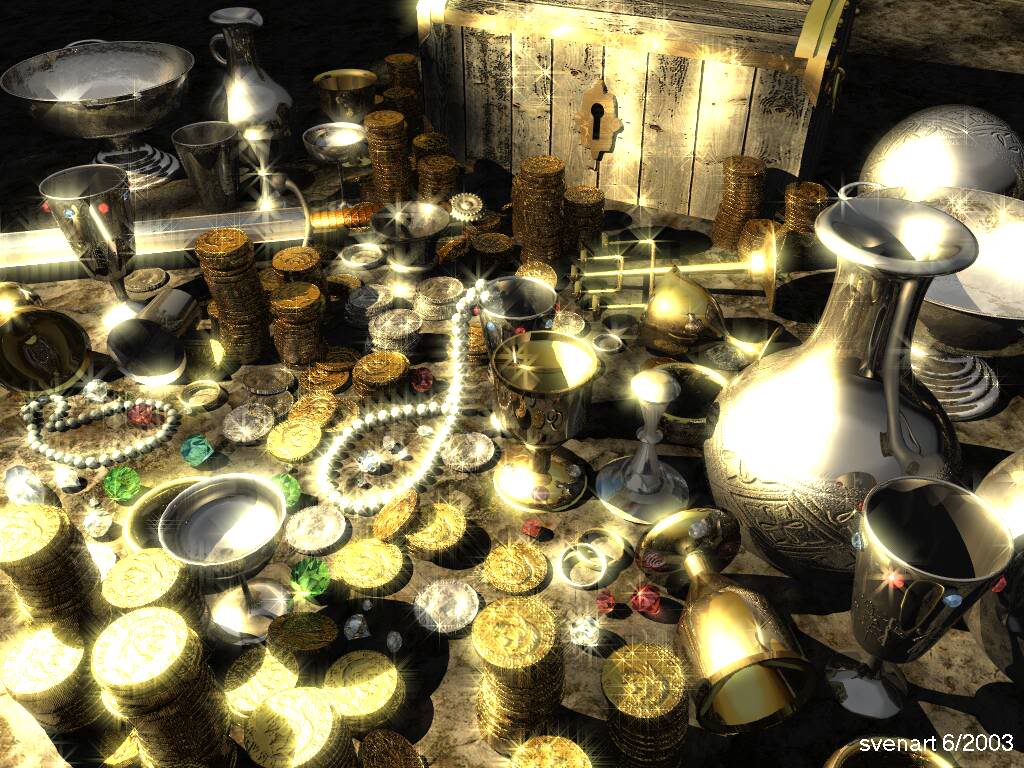
All the Treasures of the World Part I: Gems is a twelve page supplement which serves many purposes: random treasure generator, introduction to gemology, and rules supplement for the evaluation and sale of gems.  With it, you can generate a gem the size of a grain of rice up to one as big as a cantaloupe, which could be worth anywhere from a measly silver penny to 100,000 gold pieces.

The first section allows to to randomly generate gems.  You can either roll for value on the table provided or, if you know the value of the gem (which is more likely from my experience), you can roll on the charts based upon value to find out what type of gem you've found.  For example, a 1d20 roll on the 10gp Base Value chart gives you a Moss Opal if you roll a 12.  I wouldn't know a Moss Opal from a Moss Agate, so I look at the descriptions in the back and see that Moss Opals are green and white with a sparkle to them.  You polish them (as opposed to cutting them) and they are medium sized.  One of the nice things about Gems is that they have two scales for size: real-world and fantasy.  If you want gems the size of fists and melons (keep in mind the Hope Diamond is like an inch around and a half inch thick), go with the fantasy rules.  If you are bit more realistic, go with the Real-World size chart.

Are we done with gems?  Heck no!  While it's a no-brainer to move up and down a chart to reflect the changes in value based on size and quality, Gems includes charts to make it a lot easier to randomly generate the sizes and quality based on final value.  You find a gem worth 500gp?  Well, on a 3d6, I roll an 8 and find that find that it's a Larger (one step) 250gp Base Value gem of Good (average) quality.  Rolling a d6 on the 250gp table, we get a Flame Pearl (and after checking the description) the size of a pea (or a marble, if you are using the fantasy sizing).  They also explain how some gems can have stars and cat's eyes and some other distinctions that most of us unversed in gemology might not know.

The last section gives some rules for identifying gems as well as detecting (and trying to pass on) fakes.  They show how jewelers, merchants, fences, and PCs will all have different abilities to detect certain things.  PCs are not very good at it, comparatively, so be wary if you plan on ripping off the pros.  I'll probably bump Dwarves up to the Merchant level of identifying things in my game (as well as any who have a merchant or mining background).

All the Treasures of the World Part II: Jewels is a little trickier to work with, since the nature of jewelry means that you have to manage a few more moving parts.  Jewels breaks down each piece of jewelry based upon what type it is, what it is made of, any kind of style or motif, and gems added.  I think the easiest way to show what the supplement is capable of is to walk you through the creation of a few bits of jewelry.

Let's say you want to buy your mother some nice, simple copper earrings.  Looking at the item chart and cross-referencing the materials chart, you come up with 5 sp.  Happy birthday, mom.

Something a little crazier?  Well, let's see what the King's Crown would be like?  Well, it's made of platinum, which makes it's frame along worth 300gp.  It's masterfully engraved with 12 images of past Kings' triumphs, upping the value to 2880gp.  We're going to go with the nonpareil level of gemstoning, since it's a sovereign's gaudy headgear.  The glory on it is a 2500gp gem (A flawless blue diamond the size of a pea), surrounded by 30 100gp gems (Lesser sapphire chips),  with 66 10gp gems (Flawless star garnet chips) in the setting.  The King's Crown is worth about 9,000gp.  Good luck fencing THAT.

Gems and Jewels  are a wonderful investment of four dollars (two bucks each).  I plan on using them extensively in my sandbox.  If you are a fan of flavor and detail in your treasure, these are indispensable.
Monday, December 27, 2010

What It Is: D&D 4e Red Box

Hope everyone had a happy holiday.  I can't report any gaming finds, but my fiancee DID get me a beer making kit.  In about a month (I have a few more things to pick up before I can begin), I should be trying out my first stout.  I'm very excited.

My biggest complaint? No Bargle or Aleena.
One of the things I got for Mrs. Higgipedia this year was the new D&D 4e Red Box.  While I am realizing my heart is with the older versions of D&D, I do enjoy aspects of 4th Edition.  I've found that it is a more balanced and egalitarian system than previous editions.  All races and classes can generally contribute in equal amounts at all levels.  Still, the home game I am trying to organize (if you are in the Stroudsburg, PA area and interested, drop me a line.  You can reach me by email or through the Facebook page on the right column of the page.) is going to be based on Lamentations of the Flame Princess, with some house rules.  I don't hate 4e the way a lot of OSR aficionados do,

That said, a mutual friend of the future missus and I is starting up a game next month and we're using 4th Edition.  Mrs. Higgipedia hadn't played D&D since 2nd Edition so I knew I had to give her an idea of the differences between the editions.  Looking around the internet, it seemed that Wizards' new Red Box would be a great fit for my needs.  So, it was one of her presents.

We were in a hotel on Long Island over the holidays and we broke out the box and gave it a whirl.  We played through the tutorial once, with Mrs. Higgipedia making for herself a nifty little Human Rogue.  We decided we'd run through the tutorial a few other times, so she could see what other characters she can make (most of my books are still in storage) and get a better idea of the gameplay.  There is a lot to unlearn and relearn when you are making the jump from 2e to 4e after fifteen years of not playing.

The box itself is a great homage to the set that got a lot of us into the hobby.  If you go back to my very first post, you'll see why I love the game so much.  When you open it, there is a lot similar and a lot dissimilar.  The Player's Book, the DM's Book, and dice are what I remember from my old Red Box.  The new one comes with cards, tokens, and maps (all reflections of the much more map-oriented version of the game as it exists now).  One of the things I don't like about the new game is the filler piece that keeps the books at a slightly more aesthetically pleasing angle, but takes up a lot of room.  I'd prefer a smaller box than filler.  It makes me feel like I am getting ripped off.

For the most part, the tutorial in the Player's book gives you the very basic tools you need to understand the game, adding concepts as needed (Just like the Moldvay Red Box).  It's a very simple two part adventure which illustrates the concepts you'll need to understand.  You get to create a human/elf/dwarf/halfling fighter/cleric/rogue/wizard and go to town on some goblins.  Very basic, very simple.  It then encourages you to gather some friends and have them try the tutorial and start a game.  With this, I am convinced that despite Hasbro and WOTC being these large corporate entities, there are still those in the industry on their end who remember what it was like to grab some friends and play a new game in one of the basements.  The Red Box is a throwback to that.

When all is said and done, your opinions of the Red Box are your opinions of the 4th Edition of Dungeons and Dragons.  If you hate 4e, you'll hate the Red Box.  If you like it, you will appreciate that it is one of the few games out there that is written with the customer who has no preexisting context for table top roleplaying in mind.  The only other game I've bought in a long time that does more than a cursory job at this is Lamentations of the Flame Princess.

I am glad I bought the Red Box for Mrs. Higgipedia and she seems to be glad as well.  As always, I welcome your thoughts on the product.  Just please be a little more constructive than "Fourth Edition Sucks."

Tuesday, December 21, 2010

What It Is: Something Unholy Stirs

What's unholy is that I paid money for this crap.
I was bumming around on DriveThruRPG, looking for some cheap adventures to help populate my sandbox.  I came across the OSRIC-compatible Something Unholy Stirs, by Sancrosanct Games.  It looked interesting and had a decently old school cover.  The premise is kind of interesting.  The typos and poor editing are painful.  I went to the Sacrosanct Games website to see of maybe they are a foreign company and English is their second language, but it doesn't appear to be the case.  The title page reads "individual artits[sp] may retain copywrite[sp]".  Dude.  When even your CYA statements are spelled wrong, you need some help.

The plot of the module sounded good at first.  A necromancer was using a village's prime location as a stop along a booming trade route as cover for her nefarious activities.  The players stumble upon said activities and attempt to put a stop to it.  Well, this necromancer is about as subtle as a rhinoceros running wild through a crowded marketplace.  Any players older than 12 will probably see through to the plot and go straight for the fairly straightforward dungeon delve.  In fact, that's what this adventure reminds me of: something I would have come up with when I was 12 writing my own adventures for the rest of my middle school friends.

This is seriously the most poorly written and edited RPG product I have ever paid money for.  Do not go anywhere near Something Unholy Stirs.

Monday, December 20, 2010

What It Is: Swords & Wizardry Complete Rules (Part Two)

All right, last week I reviewed the Player's Section of the new Complete Rules for Swords and Wizardry.  Today, I'll be finishing it up with the Referee's Section.

Let's Get Started
The introduction is good for explaining what it means to be an OSR referee compared to some of the new school games, rules interpretation in particular.  It sets the tone for a referee to act outside the rules and modify them as needed.  Compared to later editions of the game, which seem to have rules for everything and endless errata, it's a refreshing change.

Some of the symbols from p. 78.
The section jumps right into adventure design, reminding referees about their most important duty: providing a setting to give the rest of the players some form of challenge and entertainment.  The cross-sections and the maps are all hand-drawn, encouraging referees to go it their own.  There are plenty of "Dungeon Map Symbols" to give fledgling referees ideas for things to add to their dungeons.  I like this a lot because those huge lists of map symbols (I believe in the inside of the cover of the DM's book of the original Red Box) actually exposed me to new words like dais and portcullis.  I was 9 years old and had no clue what those were.  I bet if I asked around the coffee shop I'm writing this in, I'd find more people NOT knowing what those words mean than those who do know.  The key example is pretty simple and illustrates that all you really need as a referee is a brief description, stat blocks, treasure, and some space for notes.  While I look for a lot more than that from adventures I purchase, when I'm writing something up, I am usually good with the basics.

When it comes to stocking the dungeon, S&W deviates from the original sources, going for a later "Challenge Level" concept.  Starting with the "sublevels" of Challenge Levels A&B (for the weakest threats like kobolds and goblins) and going up from Challenge Level 1 (Orc) to Challenge Level 17 (Orcus, the Demon Prince).

I like ambush POV shots like this one from p.82
The random generation tables are the usual mixed bag.  The rules are quick to point out they are just guidelines, but it just seems a bit nuts to have the players run into a horde of 250 kobolds on the fifth level of a dungeon.  Two things can happen there:  Either the sheer volume of the monsters will overwhelm the players or they will be powerful enough to shrug off all of the attacks.  Either way, it's absurd.  I know large numbers of low-level monsters is something very traditional to the game, but I'd like to see someone finally start putting some common sense into it.  What's the point of rehashing these rules if you don't fix some of the things that are clearly absurd or broken?

The addition of mass combat rules in the game are a nice touch.  They look pretty simple, and I'll have to give them a whirl sometime. The siege rules are interesting that they almost admit that it's better to find a supplemental set of rules for it.  They are a bit meager for my taste, but I guess are there because the old rules had them.  The aerial and naval combat rules look pretty simple to use.

Things to Kill
Now, the section I have been waiting for.  The monster section.  154 monsters over 24 pages means that the stat blocks are succinct and the descriptions and flavor text are slim, to the point of sparse.  There aren't as many pictures as I'd expect and the ones that are there aren't always clearly linked to the monster in question.  All said, there is enough to work with here if you are a full blown member of the OSR, with an understanding of the context of the more obscure monsters. I'm thinking that some of the more obscure monsters (Carrion Creeper, Ceiling Lurkers, Trapper Beasts...) might be difficult for someone new to the game to use properly.

What's missing from this p. 119 picture?  A duck swimming in it.
One thing I really like about the monster section is that they clearly define Challenge Levels.  Well, as clearly defined as that concept can be.  Still, this is good for referees who may not be experienced enough to properly scale monsters to have an idea of how deadly their creations might be.

Ooooh!  Shiny!
The treasure system in many ways resembles the classic tables many of us grew up with.  What I like about how the Swords and Wizardry handles things is that instead of an arbitrary "treasure type," you have a gp value based upon the total experience points of the monsters.  It's a concept that a lot of later editions of the game embraced and is very nice to see here.  They have several "tradeouts" which allow you to include gems, jewelry, and magic items in lieu of cash.  So, after fighting my CL 7 Ogre Mage, I have a 2400gp treasure horde to work with.  I have one 100gp tradeout to work with (a bit low, statistically).  So the treasure ends up being 2300gp in coins and a 4gp gem.  Wow.  Let's try it again and see what happens the second time.  This time we get THREE 100gp tradeouts and one 1000gp tradeout.  This time we get a 49gp gem, a 5gp pendant, a magic sword which is cursed to force the bearer to run away from combat, a +2 staff, and 1100gp.  Not a bad system.  The magic items are your typical OSR fare.  They are clearly described and there are a lot of options stuffed into a small area.

Overall impressions
Swords & Wizardry's Complete Rules captures that moment in history where the original D&D rules were becoming Advanced Dungeons and Dragons.  It's clear and, instead of having to look in a number of supplements for all of your options, gives you everything you need to play the "complete" version of the original rules in one place.  It's a sharp looking book and very clearly organized and written.

If the Complete Rules existed in a bubble, I'd say jump on it in a second.  Unfortunately, I'm hesitant to give it a glowing review because they are catching OD&D when it was almost AD&D.  It's the bridge between OSRIC and Swords & Wizardry's White Box or Core Rules.  If you are already using OSRIC or have a bunch of 1st Edition books, I'm not sure this will bring anything new to the table.  I say "unfortunate" because I really want to like the Complete Rules more than I do.  It's just not jumping away from the pack in any way for me.


Buy this if you more options than the bulk of the OD&D clones (S&W's White Box or Labyrinth Lord) but aren't heavily invested in OSRIC or AD&D 1e.
Don't buy this if you already have an early AD&D clone you are happy with.

You can buy Swords & Wizardry's Complete Rules here, at the Frog God Games website.

Friday, December 17, 2010

What It Is: Swords & Wizardry Complete Rules (Part One)

The Old School Renaissance/Revolution is wonderful in a lot of ways.  I don't hate D&D's later editions (I played an awful lot of 4e in Colorado Springs), but I read the blogs of a lot of these OSR guys and I remember so much of what I loved about games back when all I had was the original Red Box and the Orange Spine 1e books.  Unfortunately, one of the trickier parts of navigating the OSR is finding WHICH set of rules to play.  You've got Swords & Wizardry, Labyrinth Lord, OSRIC, Lamentations of the Flame Princess, and many more.  They each offer something different and you have to really look around to see which one is the right fit for your game.

I picked up Swords & Wizardry: Complete Rules last week in PDF form.  I have the softcover on the way, and I'll comment on that when it arrives.  For now, I'll go cover to cover on the Complete Rules PDF.  Hopefully, you'll get an idea of what makes it tick and if it's the right fit for your game.

Basic Info:
The PDF weighs in at 135 pages.  I'm thinking that's a decent size.  I'm convinced that anything over 256 is bloated (I'm talking to YOU, Pathfinder), and 128 is probably the best size to have a thorough, concise rule set.  So, on that superficial level, Complete Rules looks good.

That's just a damn sharp cover.
The beautiful cover shows a party down in the depths of somewhere, near an eerie settlement built into/on top of a mesa at the bottom of what looks to be a deep chasm.  In the foreground (I can't quite tell if the party is going to or coming from the foreground), an eel-like creature rises from the muck.  A great old-school painting which sets the tone for a classic dungeon adventure in an alien setting.  What I like about it is that all of the individual components of the cover wouldn't be eerie in and of themselves, but combine for one of the better covers I've seen in a long time.

The internal art is incredibly varied, running the spectrum from line work to greyscale, detailed and realistic to highly stylized.  There seems to be a lot more art in the Player's Section than the Referee's Section.  I'm not sure if it was a conscious decision, but it does make sense when you think about it.  A player's section (or even a player's guide) is going to be what grabs the player and gives him inspiration for his character.  The ref just needs to get down to business.
Anyway, the art inside is decent.  While nothing really jumped out as amazingly awesome, there also aren't any pieces I'd consider bad at all.  I'd say it's on the higher end of average.

I recognize a few of the names in the credits from the blogosphere and from my childhood.  It's great to see that the people who were part of the Old School when it was the New School stuck around.  Tim Kask, the original editor of The Dragon, writes a short foreward and the primary author, Matt Finch, writes the introduction.  Combined, they take up about a third of a page.  It's nice because they let you know the overall vibe of the Old School way of thinking and let the reader know that experimentation is not just allowed, but encouraged.

The table of contents fits on one page, as does a list of tables.  Listing the tables in a book is a lost art, and I am thankful that they have it.  It really speeds up the search for an important bit of information.  The overall presentation is solid.  It's dense enough to pack a lot of information inside, but not so dense it gives you a headache when you are trying to read it.  There are no frills in the layout, which is a plus for me.  I've seen too many game designers get all crazy with the desktop publisher and not realize that simpler is better.

Character Creation
I know I'm not the only one who loves to jump right into character creation without even skimming the whole rulebook.  The Complete Rules allow you to do so, so that's good.

The Assassin from page 9.  Clearly bad ass.
You start with your attributes, with a 3d6 in order, which is pretty typical of the old-school.  Swords & Wizardry (both the Core Rules and Complete Rules) only makes slight modifications to the Original D&D attribute ranges.  With some attributes, such as Dexterity and Constitution, there is a very minimalist approach to bonuses and penalties.  For examply, you basically have three classes of Constitution, low (3-8), medium (9-12), and high (13-18), which give you a -1/0/+1 modifier to your hit points, and either 50/75/100 percent chance to survive resurrection.   For the most part, this isn't THAT much of a departure, but an 18 Con in OD&D gave you +3 hit points and still only a 99% chance of surviving a major system shock.  However, the 13 gave you no hit points and an 85%.  Compared to later editions, this low-key approach may shock people who have more experience with higher attribute bonuses for higher attributes.  What it serves to do is minimize the desire for higher scores.  If a 13 and an 18 give you the same benefit, you aren't as bummed if your highest score is a 13 or a 14, which is a very real possibility when you make characters with the straight 3d6 method.

You choose your character class next.  The options here are: Assassin, Cleric, Druid, Fighter, Magic-User, Monk, Paladin, Ranger, and Thief.  This makes the Complete Rules more of an early AD&D analogue than an OD&D one with regard to classes.   The classes don't stray far from their roots, to include differing mechanics for thief skills (some are percentile, some use a d6) and lack of spells for 1st-level Clerics.  There are no attribute minimums for the classes, like AD&D, but each class does have it's prime requisites to gain the 5% bonus to experience points.  Some only require one attribute to be 13, others as many as three.  From a text box in the Complete Rules, I understand that a lot of these are strict interpretations of what is found in a lot of the OD&D Supplements.  I confess I don't have anywhere near the working knowledge of those rules as I do AD&D 1e.  I'll take the author's word for it.

At least page 26's Halfling brought some suds!
The next step is to choose your race.  You can choose human and be done with it, or you can be an Elf,  Half-Elf, Dwarf, or Halfling.  A lot of your sub-classes are not available to your demi-humans, meaning you can't play an Elf Ranger according to the rules as written, and level caps are in effect.  It's all very much the old-school standard. 

There are some pretty extensive notes on multi-classing towards the end of the race section, which clears it up much better than a lot of editions of these rules did.  They offer some different perspectives on multi-classing (brought on by the vagueness of earlier editions) and players and referees both can figure things out much easier.

True to its roots, the Alignment section is set up for the linear Law-Chaos model, compared to AD&D's 3x3 cube.  Law represents civilization, Chaos represents anarchy, and Neutrality is poorly defined as always.  My issues with D&D's alignment models are deep, and better suited for another post.

The equipment section takes up three pages.  Not too many games are this light on gear.  What's listed are the basics.  The general equipment doesn't include weights for the objects, which is a curious decision for a game that operates on pounds as the basis for their encumbrance system.  In the Weight & Movement section, it assumes that your gear weighs ten pounds on top of your money, arms and armor.  I get that encumbrance is a pain in the ass and is frequently ignored by a good number of players.  Lamentation of the Flame Princess did a good job of abstracting encumbrance, while the old game made encumbrance require a calculator.  Maybe some of the OD&D experts can chime in and let me know if that's how it was done in the white box days.

Playing the Game
The first thing discussed after you've made your character is experience.  It explains their decision to have Prime Requisite bonuses for all character classes (since it apparently was very disjointed and vague in the original rules), and bases experience on monsters killed and treasure accumulated.  Again, pure old school.
One of the greater departures S&W takes from the source material is the one saving throw compared to many different classes of saves.  It's not quite the same as the 4e single saving throw, starting high and getting lower as the character advances in level, but it does make the paperwork a lot easier.  Much like 4e, different combinations of race and class give you situational bonuses to your save, which is nice.

Combat.  The heart of the game.  One thing that is unique about Swords & Wizardry is that the rules offer both ascending and descending Armor Class charts.  I get that with different OSR products out there all with different opinions about whether AC should go up or down, you've got a million different systems.  It's still a bit distracting to have two numbers out there.  The combat is pretty much your standard old-school D&D combat rules.  A nice touch is the frequent use of alternate rules text boxes, with different interpretations from different versions of the game.

The examples of play are nice, handling many different situations that new referees and players might run into before they really get a handle on the rules.  The sections on high level adventuring, strongholds, and hirelings are brief.  They leave a lot to interpretation, which is good for the majority of OSR players who are comfortable with coming up with systems that work within their campaign's particular framework.  Players who have come from less improvisational backgrounds might find it wanting.

The magic rules are pretty simple, not straying too far from the source.   Magical research is left to the referee to decide the details, which falls in like with the hirelings and strongholds rules above.  After a quick scan of the spells, there doesn't seem to be anything about them that jumps out.  If you are familiar with a lot of old D&D spells, you won't be in for any shocks here.

Anyway...
So that's it for the first half of the review.  On Monday I'll share my thoughts on the Referee's section and give my overall review of the product.

Sunday, September 5, 2010

The Toolbox: Random Downtime Generator

I was looking through a copy of Chaosium's Cities, which was ostensibly written for all Fantasy RPGs, but is clearly built with Runequest in mind.  While it's got some okay tables for generating encounters on the fly, what really made me go "ooh!" was the "Character Catch-Up" section.  What it serves to do is determine what the characters were up to when the cameras were not rolling.  The original intent was for characters who missed the last session to have something to say for themselves.

I think he heard you say something about the 'stache.

What we're going to do here is see what Selina, the MRQ Lankhmar courtesan from a previous Rogue's Gallery, was up to for four weeks while her man, Tshimanga, is off chasing after a group of brigands who roughed up Brother Kent.

Week One:
Rolling on the Random Events table, we get a 63.  Selina has a chance to invest some cash.  She doesn't have a whole lot of cash, so she'll invest a mere 10 silver smerduks.  Okay, we go to the Investment table, check for fraud (apparently when you start an investment, there is a 10% chance it was a scam and you lose your investment).  She's good (with an 87), so she rolls on the actual table, getting a 94.  The investment is liquidated, and she rolls a 5 to get her investment back tripled.  A 20 smerduk profit on a one week investment.  Nice.

Since Selina has a job, she rolls on the Savings table to see how much of her weekly salary she saved.  With a roll of 75, she was able to save 30% of her weekly income.  I have no idea what that is.  Nothing in the Mongoose Lankhmar book, but my Deluxe RuneQuest book has it.  Oddly enough, there are no prostitution rules in the "Finding a Job" section.  I'm going to say that we'll consider her an Entertainer and her prime requisite will be Influence to see how much she gets paid.  With her Influence of 39, and Lankhmar being a large city, she brings in 7d10 smerduks a week.  I roll 44 smerduks, of which she brings home 13 smerduks and 2 algols.

We have the opportunity to roll once on the Gambling table, but we'll pass.  She doesn't strike me as the gambling type.  She can now buy any kind of items or goods.  She's got 62.7 smerduks, which we'll say she's saving up to eventually own her own brothel (unless Tshimanga stops being a jerk and starts taking her on adventures with him and she can do THAT for a living).  A quality home in a city like Lankhmar is about 6,000 smerduks.  She has a long way to go.

The article has a section on improving skills, but says if your system has its own system, that'll supercede the article.  MRQ has a system, so we'll use it here.  To help her make more money, she is going to practice both her Influence and her Dance skills.  Ever the individualist, she does this on her own without a mentor.  She rolls a 63 for Influence and a 43 for Dance.  Improvements in both!  Her Influence is now 42 and her Dance is now 26.  She decides to bank 30 of her smerduks, and the week ends.

Week Two:
Oh damn.  Rolling an 84 on the Random Events table, her living quarters burn down.  Fortunately, she rolled under 50% and was able to save her belongings.  At least she rented and didn't own.  She earned 35 smerduks, of which she was able to bring home 10.5.  Again, no gambling or investing.  She'll practice her Influence and Dance some more.  She only improved her Influence by 1, but her dance went up a whopping 2.  She banks the 10 smerduks.

Week Three: 
With a 44 on the Random Events table, she befriends someone.  A Tavern keeper gives her free drinks and lets her sleep off the effects by the tavern's fire at no cost.  She earned 35 smerduks, but was unable to save any of it.  I guess the new inn she is staying in is pricey.  She improves her Influence by a mere 1 again, but her Dance goes up a whopping 5!  Guess we know how she impressed the Tavern keeper!

Week Four:
Ooooooh, here is where the mini-game gets interesting and dangerous.  With a roll of 06, Selina is offered a dangerous mission with a 2000 smerduk payoff.  These missions give experience and gold, but could kill your character.  We've previously determined that Selina, deep down, wants to be an adventurer.  That makes it a no-brainer.  She takes the mission.  I roll a 10% death chance, and the roll is a 54, so Selina is now CONSIDERABLY richer, and gets to increase three skills (the recommended average for a MRQ story).  We're going to go with Dagger (39), Dodge (37), and Stealth (12), and she increases them by 4, 3, and 4, respectively.  We then roll to see if she gets to keep her job (due to her absence).  She fails.  I think it was worth it.  We roll to see if we can use the Employment table, as she looks to get a new job, and we can.  She gets hired in another working-class job.  We'll say she starts dancing at a different hall.  She earned 31 smerduks, but was unable to save any of it.  She JUST might be living it up a bit this week.  No worries.  She practices both her Influence and Dance and increase them both by 4.  She then banks her 2000 smerduk payoff.

Conclusion:
What started off as a pretty dull and lonely time without Tshimanga turned into an incredibly profitable adventure for Selina.  When he gets back from his little journey, they will be living in a new place and she will be dancing in a new hall.  And she'll be able to tell him about her wonderful adventure.

What's Changed:


New Skill Levels:
Dagger 43
Dance 35
Dodge 40
Influence 48
Stealth 16

Money:
33 smerduls
2 algols
2040 smerduks in the bank

Contacts:
Tavern Keeper who will give you free beer and lodging

Wow!  That was actually an enjoyable little mini-game.  I like the concept a lot.  It keeps the characters competitive from a statistical and a role playing standpoint.  Let's say Selina's player missed a session and that's why we rolled up this month.  Now Selina doesn't miss out on the skills the other players earned and has stories to boot.  PLUS, there are a few things that could be used as a plot hook:

The Investment:  Let's say she fronted the money to get a minstrel to play a hall for a cut of the profit.  The minstrel could approach her down the road with other business/adventuring opportunities.
The Fire:  What caused it?  Was someone after her or Tshimanga?  Might they try again?
The Tavern Keeper:  While Selina has the favor already, maybe he can ask her for help with something?
The Adventure:  With the rolls she picked, it doesn't sound like she was up to much good.  Maybe she had to sneak into a cult's secret meeting place and retrieve a stolen object?  Well, now the secret is out and Selina is a liability.
The Job Change: Her old employer could be annoyed/threatened that she will now draw business away from where she was working to her new hall.  It's an ugly business she works in...

I must say, the "Character Catch-Up" is a wonderful tool.  I think I will use it for a lot of games.  It doesn't require much in the way of tweaking.  It's a shame that Cities is out of print.  If you can get your hands on a copy, certainly snatch it up, if only for this mini-game.

Saturday, September 4, 2010

What It Is: Lamentations of the Flame Princess

Okay, here is my detailed review of Lamentations of the Flame Princess, by James Edward Raggi IV.  From here on out, it's going to be known as LotFP,  for obvious reasons.
Buying it.
This is only a review of the PDFs.  The actual boxed set is on it's way to my fiancee's house in Pennsylvania, since I'm in Afghanistan and PDFs are all I need.  That said, much respect to Indie Press Revolution for being the only USA Vendors that *I* saw that offered both the PDFs and hard copy for $65.  For those of us who deploy overseas or travel often, a PDF option is just too good to pass up.  I found IPR on the LotFP blog page, where James lists all of the vendors (and actively solicits more to be posted).  Sure, it's in his best interests to do so, but by having a comprehensive list of vendors, it allows the consumer to find the package that works best for their particular situation.  I found just a box set for as low as $50.  While the bundle looked better for me, I appreciate the choice.

Skimming it.
I skimmed all of the PDFs first to get an idea for the vibe of the game.  What permeates this game more than the grim and moody artwork is the love for the genre and its roots.  A 21-page recommended reading booklet (not list) discusses the influences to the game, paying homage to and giving the reader reasons to check out these books which have created a whole industry of games.  The whole set seems focused on hooking new players, so some grognards may not enjoy the Barney-style breakdowns and examples, preferring a Gygaxian aloofness and elitism.  As someone who genuinely loves RPGs and would love to see more people playing them, I embrace James' attempt to write a game that will bring players into the hobby.

The Tutorial Book.
Is it 1984?  Last night, I played through the tutorials and felt like I was 9 years old again, partly because James chose to sacrifice originality in the name of nostalgia.  I was one of the kids who got into D&D by chasing Bargle and mourning the death of Aleena the cleric.   Swap Bargle with Iri-Khan and Aleena with Alice and you have the tutorial from the original Red Box.  The choose-your-own-adventure style second tutorial is eerily close to the Red Box version as well.  For those keeping score at home, my burgeoning adventuring career ended abruptly, getting eaten by a ghoul after one round of combat.  After the tutorial adventures, James breaks down a lot of basic gaming concepts and includes a pretty realistic and thorough example of play.

The Rules Book.
Clear and simple.  It jumps right into making a character.  A lot has been made of the reordering of the attributes (they are alphabetical instead of leading off with Strength) and lack of prime requisites. The former is merely a cosmetic change and the latter only effects one out of twenty characters (even less in the case of the racial classes who needed two abilities at 16).  Since the game is derived from the old Basic Rules-era D&D, they have the racial classes, meaning all Dwarves and Halflings are Fighters and all Elves are Fighter/Magic Users.  I've never been a huge fan of this, particularly the Halfling Fighter aspect of it.  I'd rather have seen them as a modified Specialist, which is the LotFP version of the Thief.  I love what James has done with this.  Instead of advancing across the board in all thieving abilities, Specialists are able to place points into the abilities as they see fit.  This gives you the ability to customize him to be a locksmith, pickpocket, or thuggish assassin, as opposed to a watered down version of all three.

One of the other big talking points character-wise results from the decision that in LotFP, unless you are a Fighter, your hit bonuses remain static.  The fighter is the only class which gets more accurate as they level up.  I see this as an outstanding balance to the increasing spell lists and skill points the other human classes get.  The only class I think gets short changed is the Halfling.  The Dwarf and Elf classes enjoy better average hit points than the Fighter and Magic User, respectively.  The halfling, though, gets a bonus to his Dexterity score and Armor Class and has less hit points than the Fighter.  That one-time bonus never gets better.   From a game mechanics standpoint, the Halfling offers little growth.

The Lawful/Neutral/Chaotic alignment system is in effect in LotFP, true to its roots.  In the Warhammer-esque camp of Magic = Chaos, all Elves and Magic Users are required to be Chaotic.  Personally, I love the concept.  Unfortunately, the concept is not reflected in the mechanic.  Pre-memorized slots with preordained effects are far from chaotic in practice.  I'll get into that more in the section on The Magic Book.

The equipment lists are decent.  They've got more than the bare minimum but could certainly be expanded in future supplements.  They have a good variety of equipment to choose from, however, so no complaints there.

After the information you need to make a character is presented, James then gets into the bulk of the rules you need to play the game.  It's fitting that a game from Scandinavia has robust maritime and survival rules.  Even sleep deprivation is covered in the "Hazards" section.  The two rules that I particularly like are the encumbrance rules and the language rules.

Encumbrance, in most games, can be a tedious exercise in arithmetic, leading many to just abandon it.  LotFP's system has a checklist where certain criteria (types of armor, number of regular items possessed, and oversized items) are given a point value.  A dwarf in chain mail with 15 items, none of which are oversized has 3 points, making him Heavily Encumbered.  Not every item counts, and the character sheet is well set-up to keep track of what does and doesn't count.  It's quick and easy, and thereby much more likely to be used.  Instead of determining what languages the characters know ahead of time, you begin with a base of racial/cultural languages and once you encounter the language in person, you roll a simple check to see if you understand it, modified by how different the language is from the languages you know and your Intelligence score.  Very quick and very flexible.

LotFP has extensive rules covering Hirelings and Owning Property/Businesses.  I like the variety and the depth of explanation given.  The Encounters and Combat sections are clear and succinct with a lot of options for the players, but not too many to slow the game down.  One thing I like about the explanation of the Character Sheet which ends the Rules Book is that there are index links to the sections of the book which address each part of the Character Sheet.  Not enough companies do this.

The Magic Book
Many of the differences between LotFP and the original game are cosmetic and in the flavor text.  One huge difference?  There is no spell to raise the dead.  Well, raise the dead in a manner that most players would want to be raised.  Animate dead is alive and well, but if players want to come back from the dead, it appears they cannot.

Like I had mentioned previously, the Magic User and Elf spell mechanic (identical to the (until recently) traditional D&D slots) does not, in my mind, adequately reflect that chaos is the source of arcane magic.  You can use flashy effects and the casters can be as random and chaotic as they come, but when you really get down to it, the task of learning, studying, and flawlessly executing with results within reasonable expectations is incredibly orderly.  The only thing chaotic about magic in LotFP is the damage rolled.

In the author's defense, I'm not sure how much you could have done with it and kept it true to it's roots.  Something like the 2e Wild Mage from the Tome of Magic is more fitting with the vision, but I don't know how much of that (if any) is in the SRD and recreating something that doesn't violate OGL might have been a bridge too far.

The Referee Book
By starting off the book with "This Book is Compost," James signals that the Referee's Book isn't a necessity.  It is a Barney-level breakdown of what every good referee knows if they are a good referee.  After reading the book, I can't say I am that much better a referee, but I also have been playing the game for 26 years and have spent the majority of that time running games.    What the tutorial book was for players, this book is for referees.  It is a book that old-timers won't need to consult, but new referees will find invaluable if they haven't picked up a guide on how to run a game before.  We can't always assume that players have played a particular RPG before, so there is a chance that LotFP is the first exposure someone has had to running a game.  So kudos to the author for at least hoping that his game is the gateway drug to a wonderful hobby.  The quality of the advice is high, both broad AND deep.

Overall Thoughts
Whether it's intentional or not, game designers not intentionally writing a generic rules set will allow the themes they love to permeate the mechanics of the game.  From these rules, it is clear that a LotFP games are hard, gritty quests to unforgiving locations where the elements are as deadly or deadlier than any adversary you may face.  I like it.  For the most part, the system is the OD&D many of us grew up with.  The subtle changes balance out the characters a bit more and add a new layer of danger.  With no mulligans in the way of easy resurrections, the learning curve can be harsh.  It requires players and characters to be smart and not approach a game in the manner that they might approach an MMORPG.

With that, a certain maturity is required.  I remember playing Warhammer with some players who tended to throw their toys out of the pram if their character suffered any kind of disability.  Players like that are probably not ready for some of the adult themes hinted at in the game--in the recommended reading, Clive Barker was given equal time to J.R.R. Tolkien.

I like this game.  Any concerns I have about mechanical things are minor and easy worked with, ignored, or modified.  What I love about this game is it's attitude.  The tone its written in, the way the mechanics steer the game, and even the moody artwork, all point to a vibe which I love.  As soon as I was done with my initial skim of the game, my brain was already coming up with ideas.  There is nothing in the rules or the referee's guide that points you in a specific direction.  It's a subtle prod, one that gets you going "What about..." and then allowing you to make it happen.  I like that.  I like it a lot.


If you want a more balanced and deadly OD&D ruleset, look no further than Lamentation of the Flame Princess.  If you are looking for a gateway game and don't want to subject your target to 4e, look no further than Lamentation of the Flame Princess.  If you are intimidated by a wide open sandbox with little firm structure as a referee?  You may want to look elsewhere.  If you get annoyed with frequent, easy-to-use explanations written at an "I've never played an RPG before" level and prefer your games to be an esoteric code that only certain people can understand easily?  You may want to look elsewhere.